
Competition, industrial transformation, and the difference between protecting domestic companies and building companies the world wants to buy from.
In 1952, Japan had a problem. Seven years after the Second World War, its industrial economy was rebuilding, and Japanese motorcycle manufacturers were not competitive with their American and European counterparts.
The obvious answer was protection: restrict foreign access to the Japanese market and give domestic companies room to catch up. We hear versions of that argument today. What is surprising is who opposed it.
Soichiro Honda.
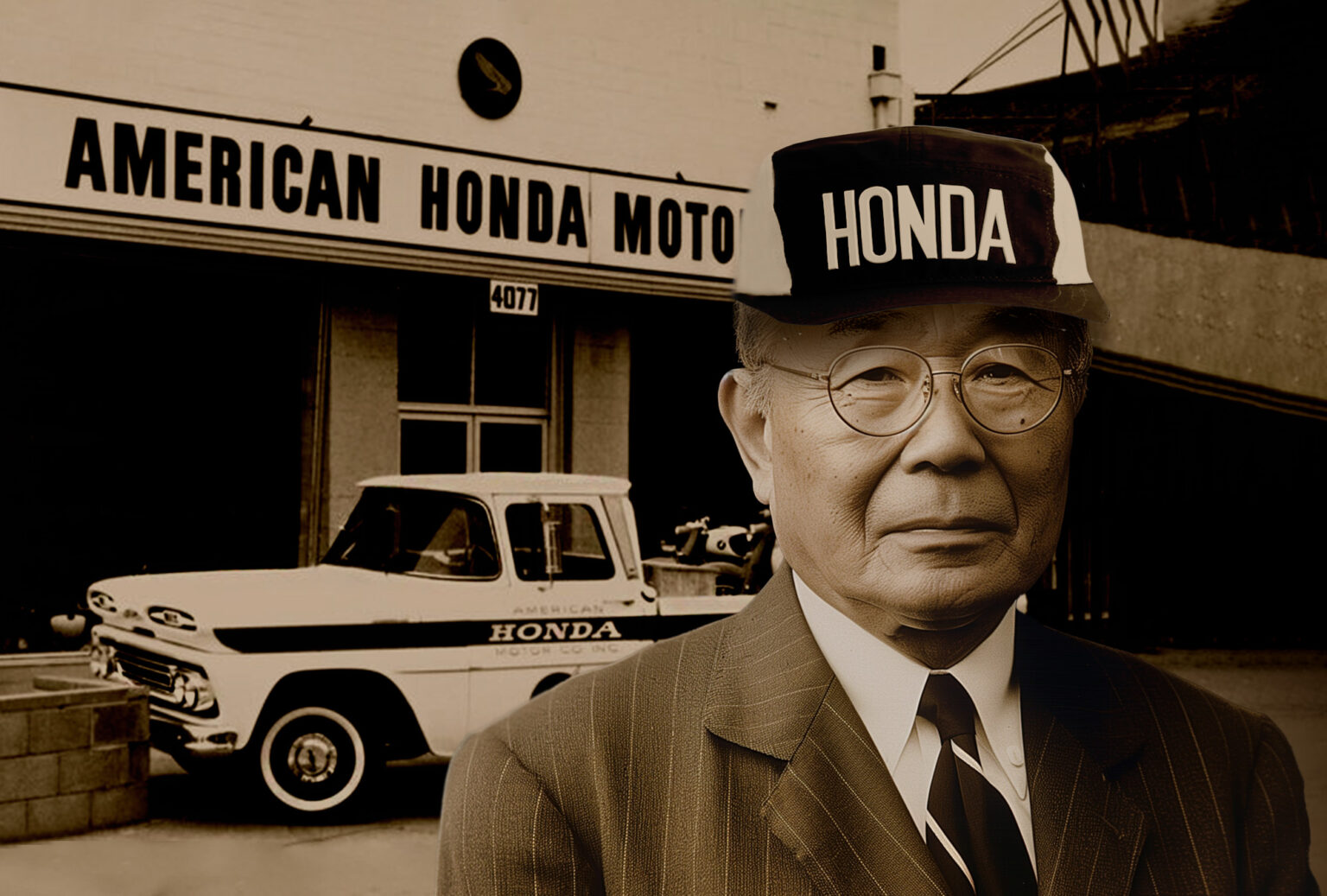
Honda was already one of Japan’s leading motorcycle manufacturers, but he regarded that standing as almost embarrassing when measured against the world’s best. In 1952, he put the principle plainly:
“Technological competition should be conducted by technological means.”
Blocking better foreign products would not make Japanese products better; it would hide the problem. Honda instead committed 450 million yen to importing the world’s best machine tools from America and Europe, despite a capitalization of only 6 million yen after its 1952 increase. He was not trying to protect Honda from the world’s best. He was trying to learn from them—and ultimately beat them.
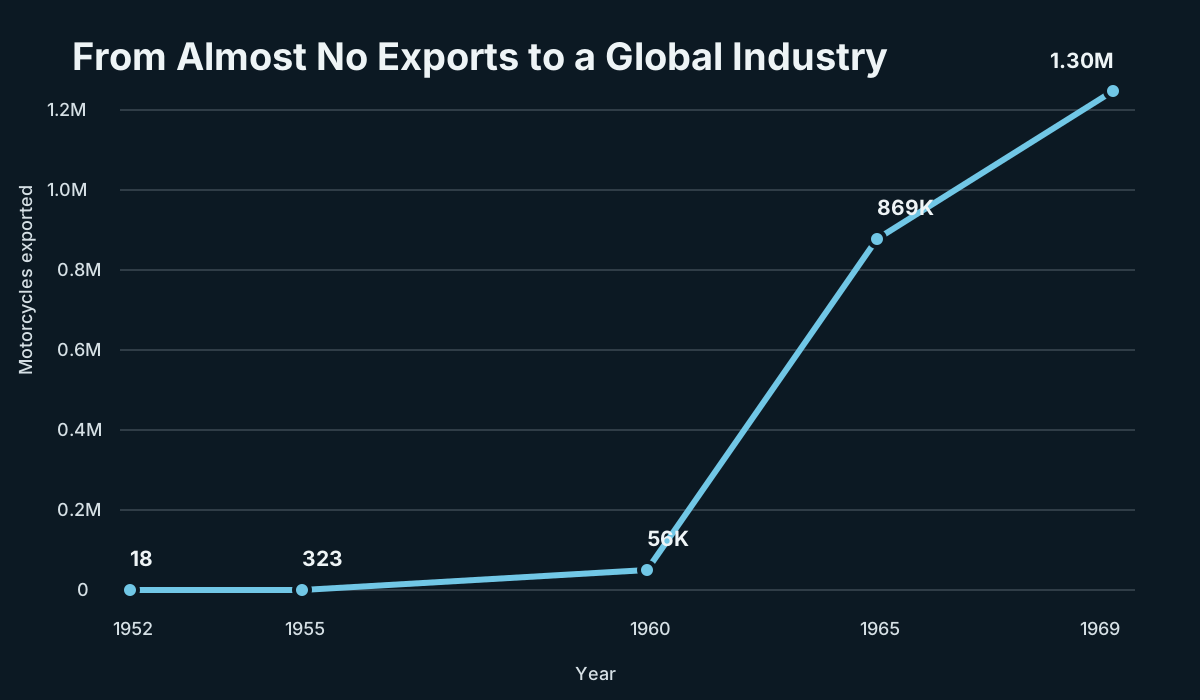
What followed matters because the more revealing number was not production. It was exports.
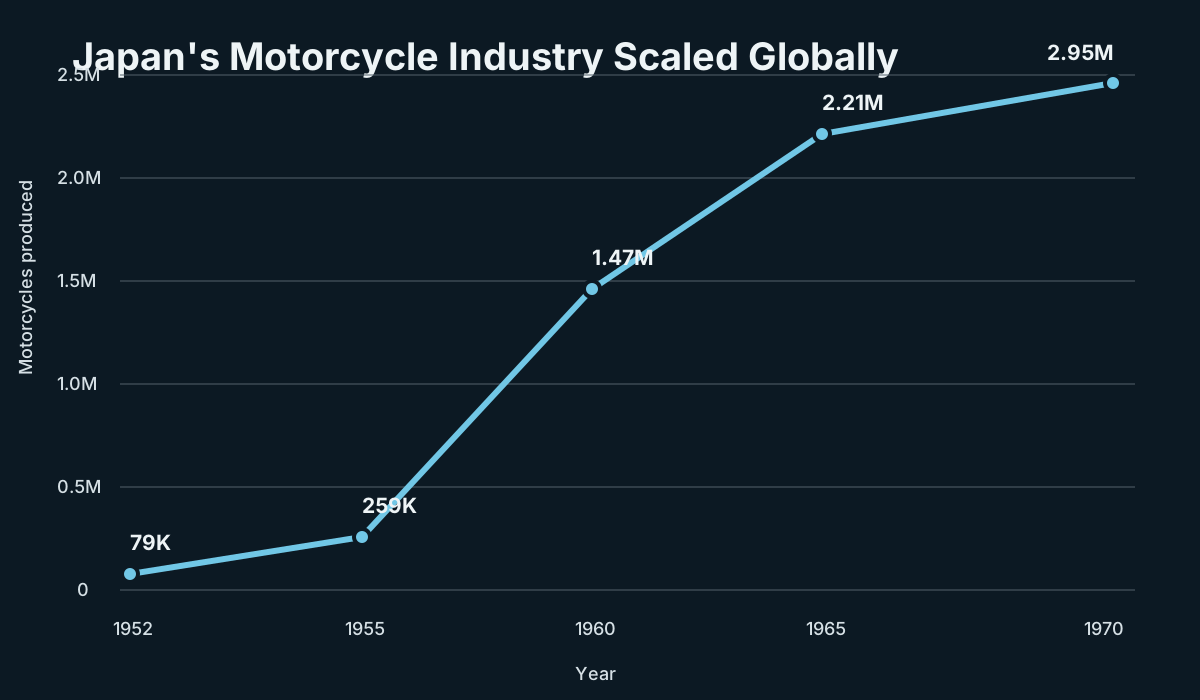
In 1952, Japan produced roughly 79,000 motorcycles. Eight years later, it was producing nearly 1.5 million. By 1970, nearly 3 million.
Competition was brutal. Japan’s postwar boom attracted an extraordinary number of manufacturers, followed by exits and consolidation. It did not preserve every Japanese motorcycle company. It helped create an extraordinary Japanese motorcycle industry.
Japan’s industrial base was severely damaged, its equipment old, and its supplier network fragmented. Its task was reconstruction and modernization at the same time. Honda’s argument was not a rejection of industrial policy; it was a rejection of policy that insulated companies from discovering where they were weak.
Canada is not postwar Japan. But the structural parallel in defence is worth taking seriously. Canada already has aerospace and defence expertise, specialized suppliers, technology companies, and OEM capabilities. The challenge is not inventing an industry from nothing; it is turning a fragmented base of capable firms into a scaled industrial system.
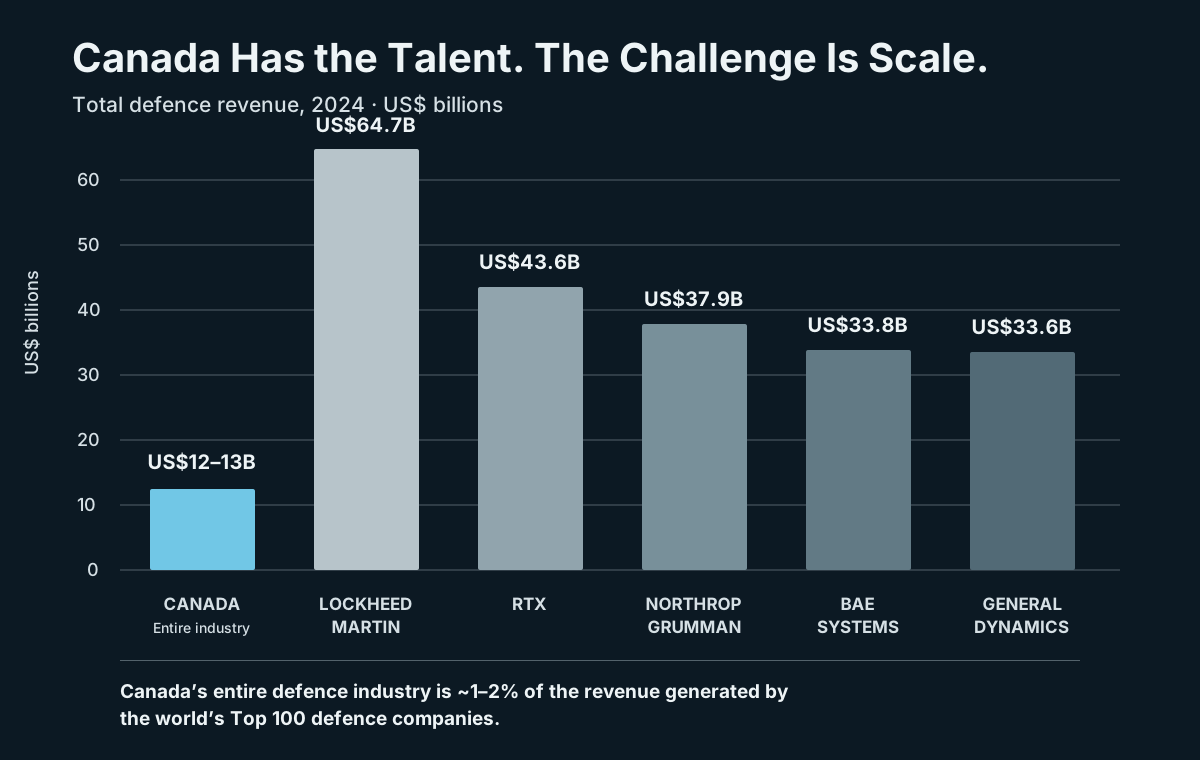
Canada’s entire defence industry represents just 1–2% of the combined revenue of the world’s 100 largest defence companies. Canadian companies often prove their technology to foreign customers before their own government takes them seriously. Shopify was a year old before it had its first Canadian customer.
Honda did not ask Americans to buy Honda motorcycles. He built motorcycles Americans wanted to buy—then cars, engines, and eventually aircraft.
If “Buy Canadian” becomes the TAM, we’ve set the bar far too low.